Ask five people what they paid for a glamping trip and you might get five wildly different answers. Some travelers sleep in a canvas safari tent for around $100 a night, while others spend well over $1,000 at a luxury resort with spa access. That spread makes it hard to plan a budget, especially when listing photos rarely tell you what you are actually paying for.
This guide breaks down the real glamping cost in 2025, stay type by stay type. We cover the average nightly rates, what drives prices up or down, and the hidden fees that can inflate your booking at checkout. You will also find practical ways to save money and an honest comparison with hotels and traditional camping, so you can decide whether the premium is worth it for your next trip.
What Is the Average Glamping Cost in 2025?
Glamping cost in 2025 runs anywhere from $100 to $1,200 per night, depending on the type of stay and the level of comfort you want. A simple canvas tent on a small farm sits at the low end of that range, while a luxury resort unit with a private deck, spa access and prepared meals sits at the top.
That is a big jump from tent camping, where a basic campsite often costs less than a dinner out. The difference comes down to what arrives already set up: a real bed, solid furniture, weather protection and, in many cases, electricity and running water. You are paying for someone else to do the hard part of camping.
At the same time, glamping is often cheaper than a boutique hotel in a comparable scenic area, especially for families, since many units sleep four or more people under one roof.
What your nightly rate typically includes
Most rates cover bedding and linens, basic furniture, and some form of heating or cooling. In the mid and upper tiers, a private bathroom is usually part of the deal, along with a kitchenette or at least a coffee setup. Lower-priced units may share bathroom facilities, so check the listing details before booking. Always confirm exactly what is included, since extras like firewood, meals or activities are sometimes billed separately.
Glamping Prices by Stay Type: Tents, Yurts, Domes and Cabins
Not all glamping is priced the same, and the biggest factor is the type of structure you sleep in. Rates generally climb as you move from canvas to wood to fully built accommodations, with novelty, views and location adding their own premium along the way. A tent pitched in a scenic valley and a cabin overlooking the same valley can sit in completely different price brackets, even a short drive apart.
The most affordable entry point is the classic safari tent or yurt, typically running $100 to $250 per night. These give you real beds, weatherproof fabric walls and often a small deck or fire pit outside. They skip some of the frills of pricier units, but they still deliver the core appeal of glamping: you arrive, the bed is made, and you never touch a tent pole. That makes them a popular first step for travelers who are new to glamping and unsure how much comfort they actually need.
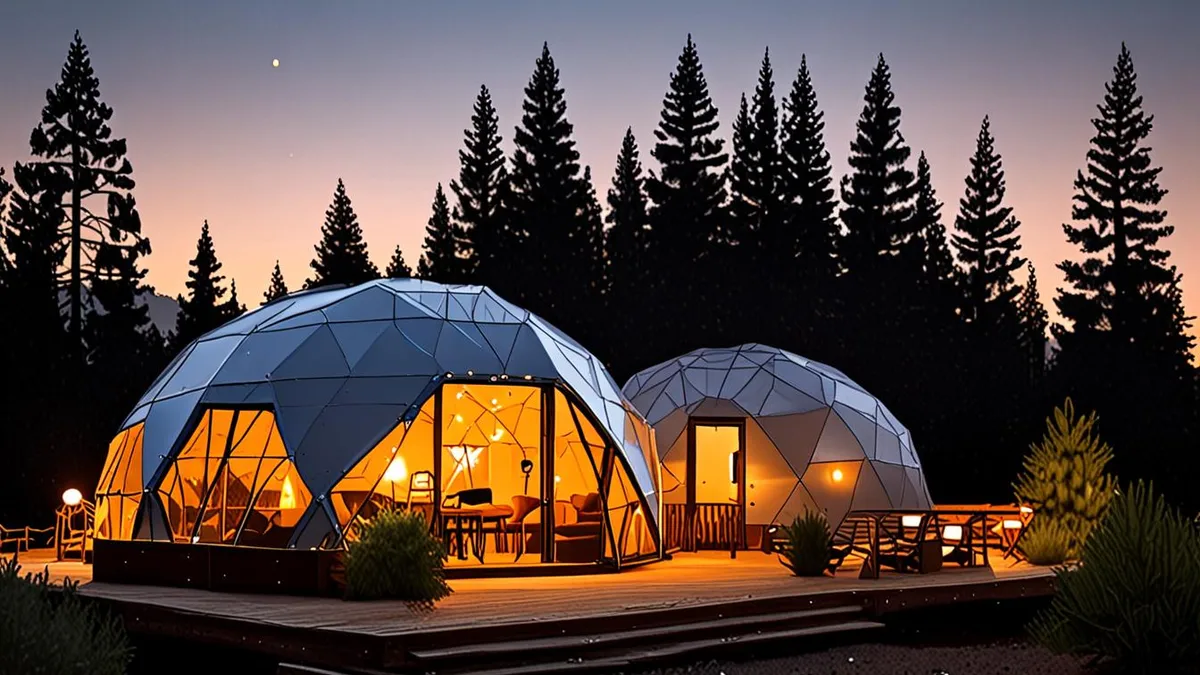
- Treehouses and geodesic domes ($200-$450 per night): You are paying for the experience itself, such as panoramic windows facing a valley or a platform built into the trees. The most photogenic units book out first, so if a specific view or design is the reason you are booking, plan further ahead rather than hoping for a late cancellation.
- Luxury cabins and lodge-style units ($300-$700 per night): These come with full bathrooms and kitchens, so you can cook real meals and stay a week without feeling rough around the edges. They also tend to be more forgiving in bad weather, which matters if you are traveling with kids or older family members.
- Ultra-luxury glamping resorts ($700-$1,200+ per night): Rates here often bundle in spa access, on-site dining and organized activities, so compare what is included rather than just the nightly number. A resort that includes meals and guided outings may work out better than a cheaper unit where every extra is billed separately.
Before you book, ask yourself what you actually need. If a full kitchen and ensuite bathroom are must-haves, a cabin may cost less than a dome with the same view but fewer amenities. On the other hand, if you are chasing a one-night splurge for a birthday or anniversary, the novelty structures are exactly what you are paying for, and a simple yurt would leave you wishing you had upgraded.
What Drives Glamping Prices Up or Down
Two identical safari tents can differ dramatically in price, and the reason usually comes down to where they sit. Units within easy reach of national parks, famous trailheads or the coastline command premium rates simply because of the setting. If you are willing to stay 30 minutes inland instead of right on the water, the price often drops noticeably.
Season and timing matter most
Peak season, roughly June through August, sees rates run 30-50% higher than shoulder season at many properties. The same tent that feels like a bargain on a September weeknight can climb sharply in mid-July. If your dates are flexible, shifting your trip by even a few weeks can be one of the biggest savings available.
Amenities and group size
Private hot tubs, ensuite bathrooms and full kitchens each push the base rate higher, sometimes by a meaningful chunk per night. They are worth it for some travelers and pure surplus for others, so be honest about whether you will actually use them.
Occupancy works in the opposite direction. A larger unit sleeping four to six people costs more overall, but the per-person price is often lower than booking two smaller units. For families and groups, the biggest units are frequently the best value on the property, so run the per-person math before you book.
Hidden Fees That Raise Your Glamping Cost
The nightly rate you see when you first search is rarely the number you actually pay. Cleaning fees and service fees are tacked onto the total booking, and platforms don’t always make them obvious until the final step. On a short two-night stay, those fees can add a meaningful percentage to your bill, sometimes pushing the effective nightly cost up by $25-$75.
Then there are the add-ons that only appear if they apply to you. Traveling with a dog or planning a trip for more than two people can trigger extra charges that vary widely from one property to the next. Some hosts also set minimum-stay requirements over holiday weekends, so a unit that looks affordable per night suddenly requires a three-night booking at peak rates.
Before you book, scroll to the price breakdown on the checkout page and read it line by line. Here are the most common extras to watch for:
- Cleaning fees: often a flat charge per stay rather than per night, which means short trips absorb the biggest hit while week-long stays spread it out.
- Service or platform fees: charged by booking sites on top of the host’s rate, usually calculated as a percentage of the subtotal.
- Pet fees: some properties charge per pet per night, while others take a one-time fee, so it pays to compare how they structure it.
- Extra-guest charges: many units base their rate on two people and add a fee for each additional guest, even kids.
- Minimum-stay rules: common over holiday weekends, when hosts may require two or three nights to book at all.
If the final total looks much higher than the advertised nightly rate, check whether a nearby property charges fewer fees. Two units with the same nightly price can end up far apart once everything is added up.
How to Save Money on Glamping in 2025
Glamping prices move with demand, which means timing your booking matters almost as much as choosing where to stay. The easiest win is the calendar: weekday stays are typically 15-30% cheaper than weekend nights, and popular units near national parks often sell out for Saturdays months in advance while midweek dates sit open.
Season matters just as much. Summer is when demand peaks, so shifting a trip to May or September can cut the nightly rate significantly while the weather is often still pleasant. You’ll also find more availability and fewer crowds at the most photographed properties during those shoulder months.
If your heart is set on a summer weekend, book early. Booking 2-3 months ahead secures the best availability for summer weekends, and many hosts release their calendars with lower introductory rates before demand drives prices up. Last-minute summer bookings usually mean paying top dollar for whatever is left.
A few more ways to keep the total down:
- Pick the right stay type: safari tents and yurts often sit in the same scenic settings as domes and treehouses, but at a lower price point since you’re not paying for novelty.
- Split a larger unit: a cabin that sleeps four or six can cost less per person than two smaller units, and many are priced with groups in mind.
- Watch the fee structure: a higher nightly rate with no cleaning fee can beat a cheaper unit that tacks on a large flat fee for a one- or two-night stay.
- Compare direct booking: some properties offer better totals when you book through their own site instead of a platform that adds service fees.
Combine two or three of these tactics and the same trip can cost hundreds less. A midweek stay in a yurt booked in early spring is about as affordable as glamping gets.
Is Glamping Worth the Price Compared to Hotels and Camping?
So is glamping worth it? The honest answer depends on what you’re comparing it to. A safari tent or yurt sits well above a basic campsite at a state or national park on price, but it often lands below a mid-range hotel room in the same scenic area — where you pay a premium and still wake up next to a parking lot rather than a trailhead.
Against a basic campsite, glamping costs several times more per night. But that comparison ignores everything bundled into the rate: a real bed, heating or cooling, furniture, lighting, and often a private bathroom. You also skip the upfront cost of buying a tent, sleeping bags, sleeping pads, a cooler and a camp stove, which can easily run several hundred dollars before your first night under the stars.
When the premium pays off
Families get some of the best value from glamping. A unit that sleeps four or five keeps everyone under one roof, there’s no gear to pack or set up, and if the weather turns bad, you’re riding it out in a structure with a roof and heat instead of a soaked tent. The same logic applies to special occasions: an anniversary or milestone birthday in a treehouse or dome feels like a treat in a way a chain hotel room rarely does.
It’s also the obvious choice for travelers without gear. If you fly in for a trip, renting camping equipment is a hassle, and glamping removes that problem entirely.
When something else is the better value
If you already own quality camping gear and enjoy setting up camp, a traditional campsite is hard to beat on price, especially for longer trips where the nightly savings compound. And if your priority is a central location in town, reliable Wi-Fi, room service and a predictable standard, a hotel usually delivers more for the money. Glamping earns its premium when the experience itself is the point, not just a place to sleep.
Final Thoughts on Glamping Costs in 2025
So, what does a night of glamping actually set you back in 2025? The short answer: it depends on how fancy you want to get. On one end, a simple safari tent or yurt makes glamping accessible on a modest budget. On the other, an ultra-luxury resort unit with spa access and all-inclusive extras can easily top $1,000 per night. Most travelers land somewhere in between.
Three things shape your final bill more than anything else: the stay type you pick, the season you travel in, and the fees tacked on at checkout. A treehouse perched over a canyon costs more than a canvas tent in a field, and summer weekends cost more than weekdays in May.
If you want the best value, aim for weekday stays in shoulder season, and always read the full price breakdown before you hit “book.” Have you tried glamping yet, or do you have a favorite stay type? Share your experience in the comments or pass this article along to a friend who’s planning a trip.