Croatia has become one of Europe’s most popular villa destinations, and it’s easy to see why: a long Adriatic coastline, hundreds of islands and a interior full of hilltop towns and truffle forests. But that variety creates a real problem for travelers. Do you base yourself in Istria, the islands near Split, or the hills around Dubrovnik? And when should you go to enjoy warm seas without paying peak-season prices or fighting August crowds?
This guide breaks the choice down. We compare villas in Croatia with hotels for groups and families, then look at the three main villa regions: Istria and Kvarner, the Dalmatian islands around Split, and Dubrovnik with South Dalmatia. We also cover the best seasons to visit, realistic booking lead times, and a practical checklist for spotting the right villa for your trip. By the end, you should know both where to stay and when to book.
Why Villas in Croatia Beat Hotels for Group and Family Stays
For groups of 6–10 people, villas in Croatia usually win the price comparison against coastal hotels. Split the weekly rate between your group and you typically get a private pool, sea-view terraces and a full kitchen for less per person than a mid-range hotel room with dinner bills on top. Add shared living space, no fixed meal times and space for kids to spread out, and the practical advantages become just as important as the savings.
The range of properties is wider than many first-time visitors expect. In Istria you can rent restored stone farmhouses surrounded by olive groves, while near Dubrovnik you’ll find modern cliffside villas with infinity pools overlooking the Adriatic. In between come island cottages on Hvar and Brač and family homes a short walk from quiet pebble beaches.
Plan around the Saturday changeover
One detail catches many travelers out: most summer villa rentals run on weekly Saturday-to-Saturday changeovers. If your flights arrive midweek, you may struggle to find availability or end up paying for nights you don’t use. Check the changeover day before you book flights, and build your itinerary around that rhythm rather than against it.
Istria and Kvarner: Truffle Country and Easy Access
Istria, the heart-shaped peninsula in Croatia’s northwest, is the easiest villa region to reach for many European travelers. Hilltop towns like Motovun and the coastal favorite Rovinj make excellent bases, and the peninsula sits roughly 2–3 hours by car from Zagreb if you fly into the capital. Pula’s airport is closer still for many of the main villa areas, so check which arrival point suits your chosen town before booking.
The appeal goes beyond convenience. Istria’s interior is a patchwork of olive groves and vineyards, and the region is famous for truffle restaurants, especially around Motovun. The coastline is gentler than Dalmatia’s, with calm, family-friendly beaches that suit travelers with young children. A villa here often means countryside views and a short drive to the sea rather than a beachfront position, so decide which matters more to your group.
Kvarner: shorter transfers, milder weather
East of Istria, the Kvarner Gulf islands such as Krk add another option. Transfers are typically shorter than for the southern islands, and the shoulder-season weather tends to be milder, which stretches the usable season beyond high summer. If you want a villa trip in May or October without long boat rides, Kvarner deserves a close look.
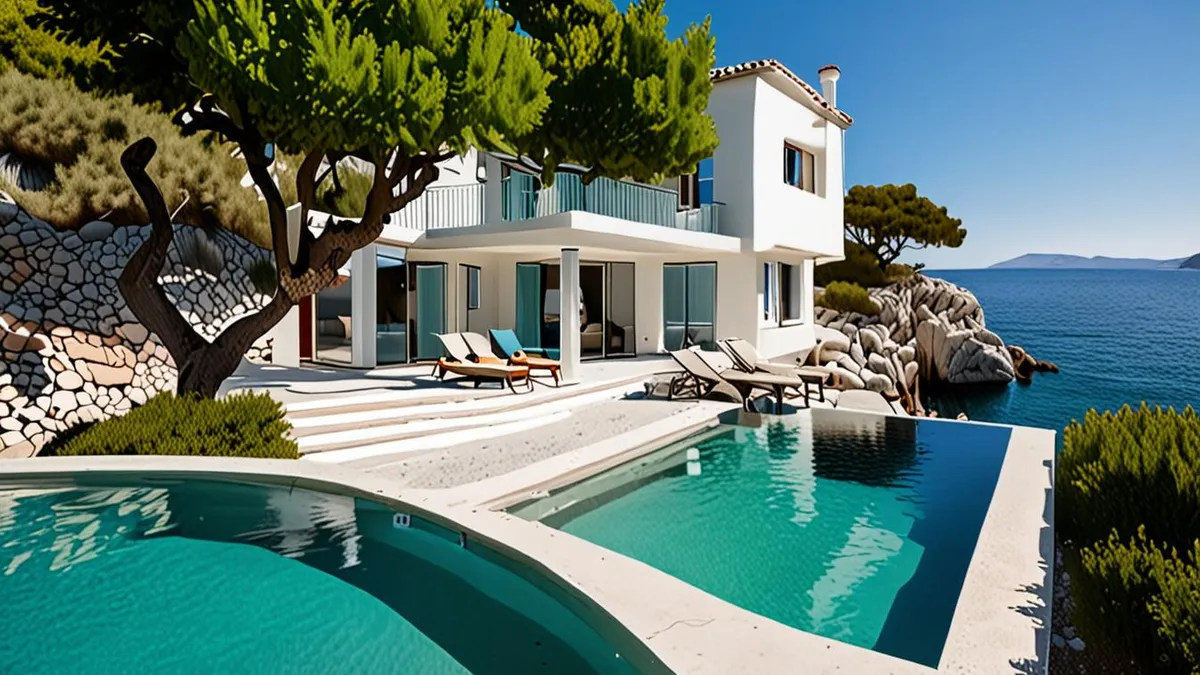
Dalmatia: Split, Hvar and the Island Villa Scene
Dalmatia is the classic Croatian villa region, and Split is its natural hub. The city has an international airport and ferry links to Brač, Hvar and Vis, each reachable in roughly 1–2 hours by boat. That combination makes it easy to fly in, stock up on supplies and reach an island villa without a long road trip, though you should always factor transfer time into your first and last days.
Hvar and Brač carry the highest-end villa market in the country. Peak-season rates here often run €1,500–€5,000+ per week, reflecting demand for sea-view pools and walk-to-town locations. Vis sits slightly off the main tourist track and can offer a quieter, more local feel, though availability is limited, so book early.
Weather built for a pool-and-beach week
The Dalmatian islands deliver the driest, sunniest summer weather in Croatia, with 11–12 hours of daily sunshine in July and August. That reliability is a big part of why families and groups return to the same island villas year after year. If your trip revolves around the pool and the sea, this is the region where long, hot days are most dependable.
Dubrovnik and South Dalmatia: Dramatic Coast for Special Occasions
Dubrovnik needs little introduction, but the smartest villa stays here begin just outside the city walls. The hills above the Old Town and the Pelješac Peninsula offer villa options a comfortable 20–40 minutes away, close enough for evening strolls through the Old Town yet far enough to escape the cruise-ship crowds that pour in mid-morning.
The Pelješac Peninsula deserves special attention. It is wine country as much as coastline, with terraced vineyards sloping down to quiet coves and small harbors. Villa life here moves at a slower pace, and you trade the buzz of Dubrovnik for olive groves, family-run konobas and some of the calmest water on this stretch of coast.
One base, not two
It is tempting to combine Dubrovnik with Split in a single trip, but think twice before splitting your week. The road journey between the two takes around 4–6 hours, longer with summer traffic, and moving a whole group mid-week eats into your villa time. Picking one base lets you settle in, shop once and actually use that pool.
South Dalmatia rewards travelers marking an occasion. Milestone birthdays, anniversaries and honeymoons suit the dramatic scenery and slower rhythm here, especially when the sea peaks at 24–26°C in July and August. Book a villa with a terrace facing the water, plan a few long dinners at home, and let the coast do the rest.
When to Book: Seasons, Prices and Lead Times
Croatia’s villa market swings hard with the calendar, and understanding that rhythm is the single easiest way to pay less for the same villa. Peak season runs from mid-June to late August, when the coast is at its liveliest, the days are longest and the sea is at its warmest. It is also when prices and crowds hit their high point, so you pay a clear premium for those long beach days.
The shoulder months of May–June and September–October are the sweet spot for many travelers. Rates typically drop by 20–40% compared with peak, and weekly prices can start from around €700 in these months. The sea sits around 18°C in May and October, which suits swimmers who don’t mind a brisker dip, while the thinner crowds make restaurant bookings and beach parking noticeably easier.
If your dates are flexible, target late September. The water has had all summer to warm up, the light is softer and golden, and the gap between what you pay and what peak-week guests paid for the same terrace is at its widest. Check current rates and availability with villa owners or agencies, since pricing shifts year to year and week to week.
How to Spot the Best Villa for Your Trip
Two villas can look identical in photos and behave completely differently on the ground. The difference usually comes down to logistics and details that listings gloss over, so work through them before you commit a deposit.
Start with transfers, especially for island properties. A villa on Hvar, Brač or Vis looks dreamy until you factor in the ferry or catamaran crossing, the waiting time at the terminal, and seasonal schedules that may not match a late flight. If you arrive at night, you may need an overnight stay on the mainland before you ever reach the villa, so build that possibility into your itinerary and budget.
Details worth verifying
Before booking, confirm the practical points in writing with the owner or agency:
- Pool heating. Many pools are unheated, which matters in the shoulder months when nights are cooler; a heated pool can be the difference between swimming and looking at it.
- Air conditioning. Restored stone farmhouses and older villas often lack modern cooling, and thick walls only help so much at the height of summer; check which rooms have units, not just that the listing says “AC”.
- Parking. Steep driveways and narrow village lanes are common along the coast; confirm how many cars fit and whether access is realistic for your vehicle size.
Finally, read the most recent reviews rather than the overall score. Look for comments on noise from nearby roads or neighbors, the condition of the access road, and whether the “sea view” is a full frontal panorama or a sliver between two rooftops. Recent guests will tell you exactly what the photos will not, and a short message asking them a direct question can settle any doubt before you pay.
Planning Your Croatian Villa Trip
Choosing between Istria, Dalmatia and South Dalmatia comes down to the kind of trip you want: truffle country and easy transfers in the north, island-hopping around Split, or dramatic coastal scenery near Dubrovnik. Each region has its own character and access points, so match the base to your group rather than trying to see everything in one stay.
Timing does the rest of the work. The shoulder seasons of May–June and September–October balance pleasant weather with lower rates and fewer crowds, while peak season suits travelers who want the warmest sea and don’t mind the prices. Book 6–12 months ahead for the best peak-season villas, or around 3–6 months for quieter dates. If this helped you plan your trip, leave a comment or share the article.